

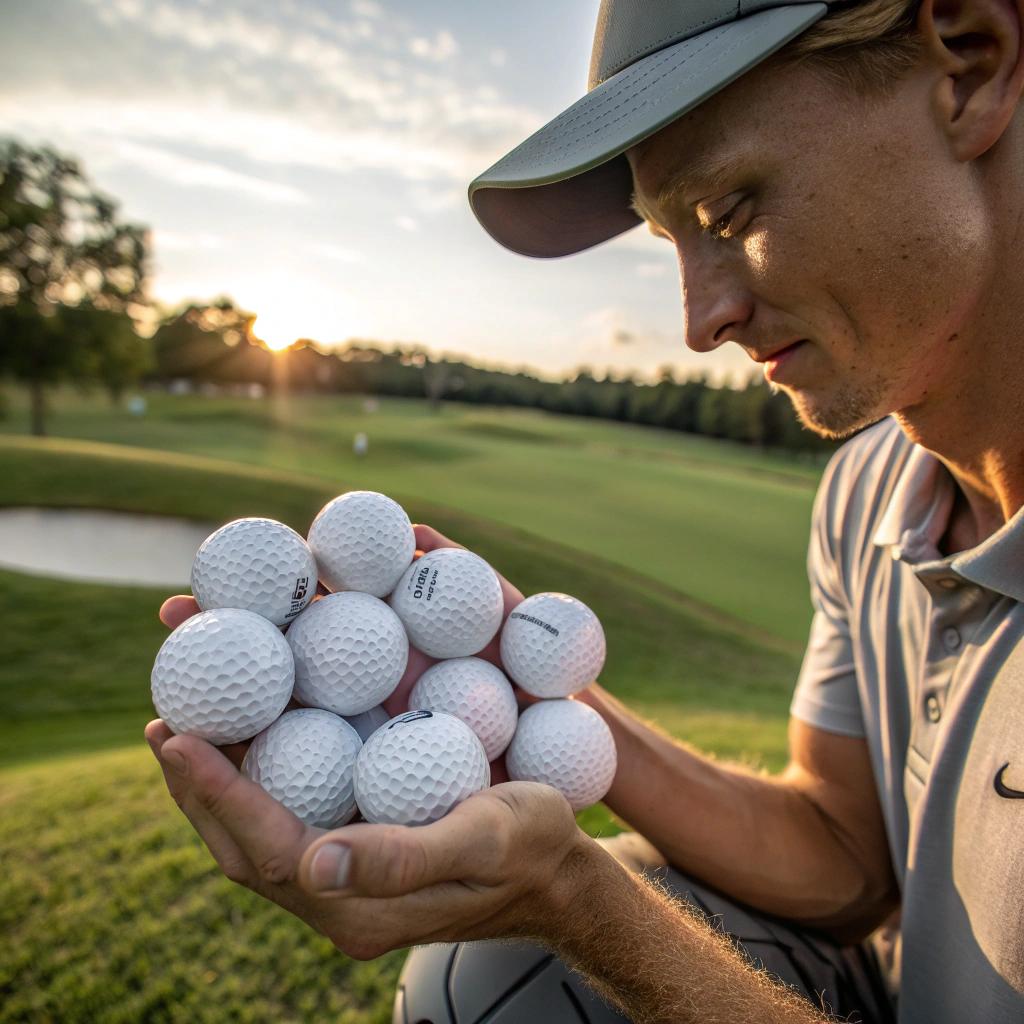

Understanding Golf Ball Compression
When you shop for golf balls, especially as a newer player, there is one technical feature that often gets mentioned: compression. I remember when I started, this term confused me. I wondered if people were just making things sound complicated, or if it made a real difference in how you play. It turns out, compression is not just marketing talk. It actually matters. But maybe not in the way you first think.
What Does Golf Ball Compression Mean?
Simply put, compression is a measure of how much a golf ball will deform when hit. The number is often listed somewhere on the box or in the ball’s technical details. Higher numbers mean the ball is firmer. Lower numbers mean it is softer.
It might help to think of compression like firmness. When you hit the ball, it squishes a little. The clubface squeezes it. The softer the ball, the more it compresses. Harder balls do not squish as much.
Manufacturers will show compression with numbers on a scale, usually from 30 to 120. A ball labeled 50 is much softer than one made for 100.
How Is Compression Measured?
Golf ball manufacturers measure compression by taking the ball and pressing it with a standard amount of force. If the ball compresses by a tenth of an inch, it is ranked a certain way. Each increase on the compression scale means the ball is slightly firmer.
Here is a basic table outlining how compression relates to firmness of the ball:
| Compression Rating | Type | Typical Target Player |
|---|---|---|
| 30-50 | Low compression / Soft | Slower swing speeds, beginners, those seeking a softer feel |
| 60-80 | Medium compression | Average players, moderate swing speeds |
| 90-120 | High compression / Firm | Faster swing speeds, advanced players |
Does Compression Affect Your Distance?
I often hear players ask: Will a higher compression ball add yards to my game? The honest answer is, maybe. It depends more on your swing speed and feel preference than the number on the box.
The firmer the ball, the more force it will resist. If you have a fast swing, the firmer ball might actually travel farther for you. But if your swing is slower, a softer ball lets you compress it better, which can help you get more distance and potentially better ball flight.
If you are not swinging the club fast enough, a high-compression ball can feel dead off the clubface. You might notice you have to really lash at the ball just to get it going. On the flip side, a player with a fast swing could struggle to control a low-compression ball, sometimes hitting big hooks or ballooning shots.
Finding the Sweet Spot for Your Swing
The main factor is matching the ball to your swing. Here are some general guidelines:
- If your driver swing speed is under 85 mph, look at balls in the 30-60 compression range.
- If you swing 85-100 mph, a medium compression ball (60-80) might suit you best.
- If you have a fast swing, above 100 mph, try balls with 90+ compression.
Some people get a little too caught up in the numbers. Yes, picking the right compression helps, but real performance comes down to how the ball feels for you. If you prefer a harder or softer feel, trust that as much as the data.
Feel on Contact: What Does It Really Mean?
A lot of advertising around golf balls talks about “feel.” But what does that actually mean? When you strike a high-compression ball, it feels different from a low-compression one. Some describe this as clicky or hard. The softer ball will feel, well, softer, maybe a little muted.
Feel is not just about softness. It is about how information from the clubface travels up through your hands and arms. Some players love feedback, some want less of it.
To me, feel is both physical and mental. Sometimes I think I play better with a certain ball just because it feels right, even if the numbers do not support that. Maybe it is psychological, but golf is full of little mental tricks like that.
That being said, professional golfers sometimes choose harder balls even though they do not always feel pleasant, because they can help control spin and distance. On the other hand, some pros want every bit of feedback they can get.
Spin Rate: A Subtle Part of the Equation
Compression also plays a role in how much the ball spins, key for approaches, chips, and putts.
Softer, low-compression balls tend to spin less off the tee, reducing slice or hook. However, they might not check up as much on approach shots or from the rough. A firmer ball can spin more, especially with wedge and iron shots, which lets advanced players control the ball on the green. If you are fighting too much spin or ballooning, try a softer ball.
Is Low Spin Always Good?
Not always. Some players want less spin because they slice or hook, but low spin also reduces your ability to stop the ball quickly on the green. In other words, by making one thing easier, you might make something else harder.
Swing Speed: The Real Factor to Notice
I have mentioned swing speed a few times, and for a reason. The ideal compression rating is most closely linked to how fast you swing. Many new players do not know their swing speed, so they pick at random or by what their favorite golfer uses.
But the pros are in a different category. Your swing speed determines how much the ball compresses at contact.
Here is why this matters:
- Fast swingers need higher-compression balls to avoid losing control and ballooning shots.
- Slow or average swingers get more out of low-compression balls, which compress more easily and travel farther with less effort.
So, if you feel like you cannot get distance with a “tour” ball, do not be surprised. It is made for swings above 100 mph.
You do not have to guess your swing speed. Many shops have a launch monitor, or you can check with a pro. If you do not want to get measured, think about your average driving distance. Hitting 200 yards or less? Use a softer ball. Hitting it 250+? You are likely somewhere in the medium range or above.
Misconceptions About Compression
There are a few common myths about ball compression, and they keep coming up, so it is worth addressing:
- “Tour balls are always harder.” Not always. Some tour balls have medium compression. The choice comes down to feel, spin requirements, and control as much as anything else.
- “High compression balls go farther for everyone.” Only if you swing fast. Otherwise, you may actually lose distance.
- “Soft balls mean more spin.” Actually, softer balls usually spin less off the driver, but can spin more around the greens depending on the cover and construction.
- “There is a single best compression for every player.” Most likely, there is a range that suits you. Do not worry about sticking to one number.
I sometimes think golfers want to find a magic solution, but it is really about matching personal feel and ability with the right ball.
Golf Ball Construction and Compression
The number on the box is influenced by the inside structure of the ball. Balls can be made of two pieces, three pieces, sometimes more in the case of so-called “tour” balls.
- 2-piece balls are usually low to medium compression, made mainly for distance and durability. Most beginners start here.
- 3-piece (or more) balls can have softer or firmer compression and usually offer more spin control. These are often used by players who want more control around the green.
Manufacturers now use new materials and clever designs, so the lines have blurred. You can find soft feeling balls that still give good spin and control, but you usually pay more for that.
How to Choose the Right Compression for You
This brings us to the practical question: What ball should you be playing?
You can narrow it down:
- Figure out your swing speed if possible (via monitor, teaching pro, or even a good GPS watch).
- Decide if you prefer a firmer or softer feel at contact. Do you like feedback or something more muted?
- Think about where you need help. Are you short off the tee? Having trouble holding the green? Getting too much curve on your drives?
- Read packaging or online product pages for compression numbers and compare options for your category.
- Test a few types on the course, not just the practice range. Sometimes balls behave differently on grass, especially when putting or chipping.
You might want to try a sleeve of three different compression balls in the same round. Pay attention to what feels easiest to control, which one travels the best, and how each performs on the green.
Does Compression Matter When Putting?
A less discussed topic. When you putt, there is usually not enough force to compress the ball significantly, regardless of rating. Feel becomes more about the cover and construction than the compression number itself.
Some players claim they putt better with a firm ball. Some swear by a softer feel. If putting is your main concern, focus more on the ball cover (urethane is usually softer than Surlyn, for example) and overall ball feel.
Weather and Temperature: Subtle Effects
Compression is measured at room temperature. In very cold weather, balls get firmer. A low-compression ball in summer could feel harsh in winter. Some players switch between different balls across seasons.
Is the Difference Noticeable?
For most players, you might notice softer balls performing slightly better in cold weather. If you can, experiment. See if a softer ball in fall and a firmer one in summer makes sense for your game.
Cost Differences: Softer Is Not Always Cheaper
One of my first surprises was learning that some of the softest balls are actually more expensive, not less. Premium materials, urethane covers, and advanced design cost more.
Some budget two-piece balls are soft, but they might not spin as much on greens. If you are tempted to buy only by price, keep in mind how much difference the ball can make over a dozen rounds.
Should Beginners Worry About Compression?
Maybe, but not too much. For new players, finding a comfortable ball that inspires confidence is arguably more important. If you are struggling with distance or getting the ball airborne, a lower compression can help. But do not assume changing balls will cut ten strokes from your game overnight.
Try not to overcomplicate things. Pick a ball, stick with it for several rounds, and watch your results. If you see improvement, stay with it. If you get better, or your swing changes, that might be a time to test something new.
Is There a Wrong Ball?
Sometimes. Using a very high-compression ball with a slow swing can make the game harder, but using a very soft ball with a fast swing may actually cost you spin and control. Yet most players fall into the middle range and can get away with several options.
Ball Fitting: Is It Worth the Time?
Some golf shops offer “ball fitting” sessions. These try to match your launch and spin numbers to a ball. The process can be interesting, especially if you are technical-minded. But ball fitting is not an exact science.
A launch monitor might tell you a certain ball is best for your numbers, but if you hate the feel or lose confidence with it, your scores might not improve.
Building Confidence with Your Ball
Golf is strange. I have watched skilled players switch to a ball they love and immediately play better, not because of a miracle in technology, but because they trust themselves with it. Maybe you will notice a new ball spins a lot more. Or it carries five yards farther. Or you just like how it rolls when you putt. Performance is not always what the data says.
Tour Players vs. Regular Players
You see tour pros and think, “Should I play what they use?” Maybe, but maybe not.
Tour pros swing harder, need to control spin, and can benefit from a firmer, higher compression ball. For recreational players, those same balls can feel harsh and sometimes unforgiving.
That is not to say you should avoid what the pros use, but imitate with care. Remember, the equipment is part of their job.
Common Ball Examples by Compression
Here is a simple overview of current popular models and typical users:
| Ball | Compression | Type of Player |
|---|---|---|
| Titleist Pro V1 | ~90 | Fast/strong swingers, advanced players |
| Titleist TruFeel | ~50 | Slow-moderate swingers, high-handicap, prefer soft feel |
| Callaway Supersoft | ~38 | Beginner, slower swing, softest feel |
| TaylorMade TP5 | ~85-90 | Better players, want performance and spin |
| Wilson Duo Soft | ~35 | Slower swingers, value soft feel, good for cold weather |
Check for current models, as compression figures can change from year to year.
Experimenting Brings Long-Term Results
If you take away one thing, it is that compression is worth paying some attention to, but not obsessing over. Most likely, you will have to try a few balls before you notice what actually matters in your game.
If you pick a ball because you think it will make you better overnight, you will often be disappointed. Consider feel, your own swing, and look for small changes over several rounds. Tiny differences add up over time.
You might find a mid-compression ball you thought was “average” ends up being perfect. Or you notice that you hit your drives farther with a soft ball, but lose greenside control. Some tradeoffs cannot be avoided.
Sometimes the answer is not changing your ball at all; it is improving your swing, or working on your short game. Still, the right ball for your swing speed and feel can quietly give you a little help. And if you find a brand and model that works, stick with it. Changing every round will not help you build consistency.
Questions to Ask Yourself Before Switching Balls
- How fast do you swing your driver?
- Do you lose distance compared to your playing partners?
- Are you struggling with slices or hooks?
- Do you like a softer or firmer feel?
- Is stopping the ball on the green more important than distance?
- Do you play mostly in hot or cold weather?
- What is your budget for golf balls?
Testing sometimes seems tedious, but with every experiment, you learn a bit more about your own game. Try to pay meaningful attention to how a ball performs over several rounds, not just one or two swings at the practice range.
Small Choices, Big Differences
The difference a ball makes is not always obvious right away. Over time, though, you notice certain patterns. Maybe your drives start rolling out a few yards farther, or a different ball lets your wedge shots check up by the hole instead of running past. Perhaps you simply feel better standing over the ball, which is harder to measure but can matter a lot in golf.
What begins as just a small question about compression can lead you to more consistency, or just a little more enjoyment. In the end, choosing a ball is part technical and part personal. Take your time, try a few, and see what actually works where it matters, the golf course.